Reduce risk. Perform daily and monthly crane inspections.
Recognize site hazards, power lines, and ground stability issues.
Ensure compliance. Set up cranes with outriggers and cribbing for safe operation.
Interpret load charts accurately. Read and apply manufacturer load charts, including radius and boom length.
Proper setup, use, and application of all safety devices and operational aids (i.e. LMIs, anti-two-block devices, and boom angle indicators).
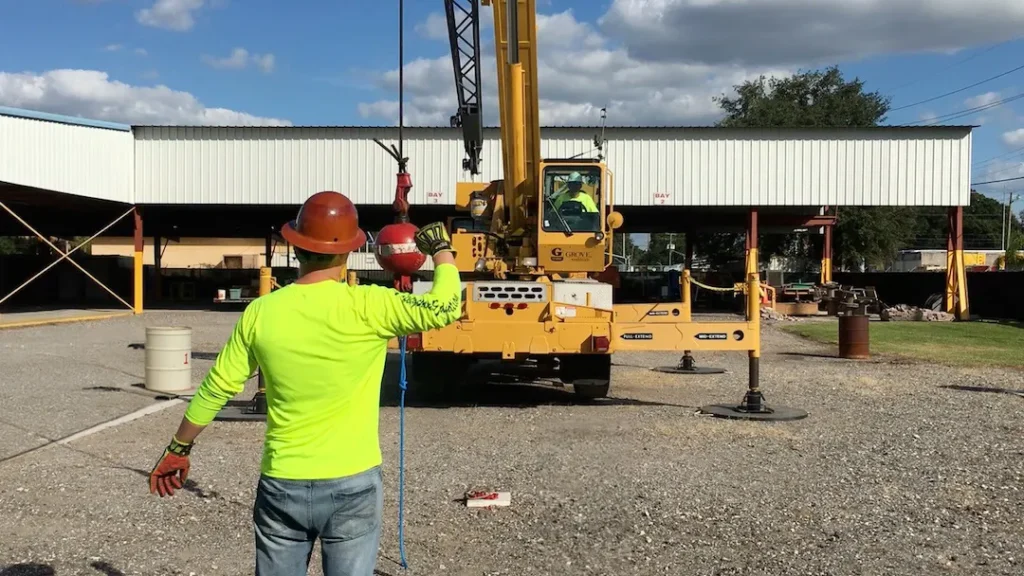
Operate cranes safely: hoisting, booming, swinging, traveling with and without loads.
Minimize liability, enhance safety culture. Apply shutdown procedures and emergency responses.
OSHA and ASME requirements for mobile cranes in general industry
Crane design, components, and safety devices
Daily and monthly inspections
Site hazards: power lines, ground conditions, weather, and communication
Outriggers, cribbing, and setup
Load chart interpretation and application
Operator aids and safe operating practices
Hoisting, booming, swinging, traveling
Shutdown and emergency procedures
Employer documentation requirements
OSHA 1910.180: Meets operator training and evaluation requirements for cranes and derricks in general industry.
OSHA 1926 Subpart CC: Provides training aligned with construction crane requirements.
Operators engaged in construction activities must also obtain CCO certification. Learn more in our Mobile Crane Operator – CCO Prep course.
ASME B30.5: Aligns with ASME standards for safe crane operation.
Employer Documentation: Provides written evidence of training and evaluations employers can use to qualify operators.
Prepare experienced crane operators to earn nationally accredited CCO certification in telescopic (fixed- and swing-cab) and lattice boom cranes. Includes onsite written and practical exams, plus all study materials.
This is qualification training. Participants complete written assessments and hands-on evaluations, and employers use the provided documentation to designate operators as qualified. For construction lifting activities, OSHA requires third party, accredited certification.
This OSHA mobile crane training program supports compliance with OSHA 1910.180 (general industry) and ASME B30.5 (mobile cranes). Operators working in construction must meet OSHA 1926 Subpart CC, which requires third-party, accredited certification.
This course provides qualification training aligned with both OSHA 1910 (general industry) and OSHA 1926 (construction). It covers inspections, load charts, and safe operations. However, for construction crane operators, OSHA requires third-party, accredited certification. Our Mobile Crane Operator – CCO Prep course is designed for that purpose.
Yes. Onsite mobile crane operator training can be delivered at your facility using your equipment, with instruction and evaluations tailored to your cranes, loads, and jobsite conditions.
Crane Tech provides training and written/practical evaluations that support an employer’s qualification decision. Evaluation results are valid for two (2) years. Employers must re-evaluate operators sooner if unsafe operation is observed, workplace conditions change, or new tasks or equipment are introduced. Operator qualifications are not transferable between employers.