

Rigger Level 2 Qualification - CraneTech

Rigger Level 2 Qualification

Build on the fundamentals of Rigger Level 1 and develop advanced skills in load weight estimation, sling tension calculations, and rigging planning. Prepare riggers to handle more complex, non-routine lifts with confidence, while meeting OSHA and ASME requirements.

Is Qualified Rigger Level 2 the right course for you?

  • You need qualified riggers trained to handle symmetrical and non-symmetrical lifts.
  • You need team members qualified to calculate load weight and sling tensions.
  • You need qualified journeyman level riggers to supervise material handlers and entry level riggers.
  • You’re looking for training and evaluations that align with OSHA and ASME requirements for qualified riggers.

After this course, participants will be able to:

  • Plan complex lifts safely. Calculate load weight, center of gravity, and lift points.

  • Apply advanced rigging math. Calculate sling tensions and load angle factors using applied math for symmetrical and non-symmetrical loads.

  • Select and inspect rigging hardware and slings for lifts.

  • Plan and perform non-routine lifts, including off-set (COG) and multi-leg hitches.

  •  Supervise and guide Level 1 riggers in day-to-day rigging tasks.

  • Supervise and guide beginner level riggers and material handlers in day-to-day rigging tasks.

  • Meet compliance requirements. Complete written and practical evaluations that meet ASME B30.5 qualified-rigger exam elements.

Training Options

Crane Tech Campus

Public classes at our locations; instructor-led lessons and guided hands-on practice.

At Your Facility

Training on your equipment; tailored scenarios and documented evaluations.

Train-the-Trainer

Prepare your in-house instructor(s) with ready-to-teach material and evaluation forms.

Topics Covered

  • Complex hitches and multi-leg configurations

  • Rigging hardware: hooks, shackles, links, and blocks

  • Sling inspection and removal criteria

  • Load control: taglines, drift, and rotation

  • Non-routine lifts and planning considerations

  • Supervise entry level riggers and material handlers

  •  Hazard recognition and communication

Compliance

  • OSHA 1910.184: Complies with general industry sling inspection and use requirements.

  • OSHA 1926 Subpart CC: Meets qualified rigger requirements for assembly/disassembly and work within the fall zone.

  • ASME B30: Aligns with various ASME standards covering rigging practices, slings, hardware, and safety.

  • ASME B30.5: Mapped to ASME B30.5 requirements for completion of a written and practical examination for competency.

  • Employer Documentation: Provides written evidence of training and evaluations employers can use to qualify riggers.

Training format

Three-day program combining classroom instruction, demonstrations, and hands-on practice. Includes written assessments and practical evaluations to confirm participant knowledge and skills.

Prerequisites

Participants must:

Be age 18 or older

Be able to comprehend English (verbal and written)

Have basic math skills

Highly suggested but not required: Prior Rigger Level 1 training or experience

Materials included

Each participant receives a workbook, handouts, sling charts, and reference sheets. Successful riggers are awarded a certificate of completion, a wallet card, and employer-ready documentation.
Related Courses

Rigger Level 3, Master Rigger, Rigging Signaling

Rigger Level 3 (Master/Advanced)

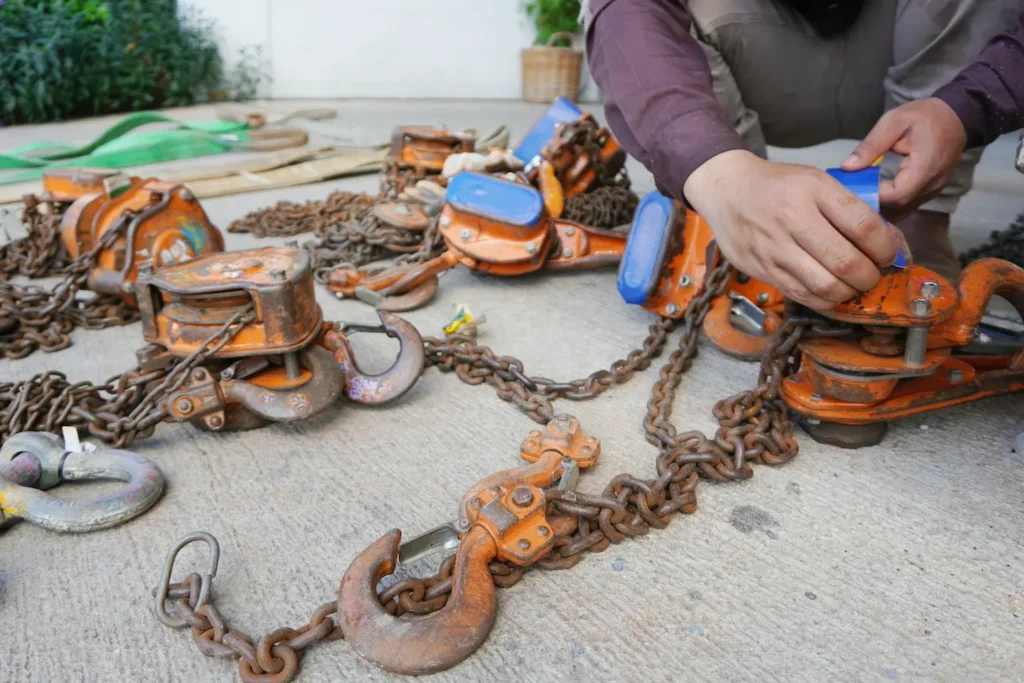
Person squatting on concrete, handling rusty orange and blue chain hoists and hooks. The scene conveys an industrial, hands-on work environment for the Crane Tech Rigging Gear Sling Inspector Training

Rigging Gear & Sling Inspector

signalperson training, cco certification

Signalperson Qualification

Frequently Asked Questions

What makes Level 2 different from Level 1?

Level 1 riggers handle routine, repetitive lifts with known load weights and standard hitches. Qualified Rigger Level 2 training equips riggers to manage more complex lifts, including those requiring load weight estimation, sling tension calculations, or non-standard hitches. This level is commonly required for riggers working independently or responsible for lift planning decisions.

Do I need Level 1 before taking Level 2?

 Level 1 is recommended but not mandatory. Employers may send riggers directly into Rigger Level 2 training if their job responsibilities include planning or performing non-routine lifts.

What tasks can a Level 2 rigger perform?

A Level 2 rigger can estimate load weight and center of gravity, calculate sling tensions, select rigging based on loading, inspect rigging gear, and plan complex lifts. They can perform these tasks unsupervised and guide Level 1 riggers in routine rigging work, making Level 2 the appropriate choice for most active jobsites.

Does this Rigger Level 2 course meet OSHA and ASME requirements?

Yes. The Qualified Rigger Level 2 course aligns with OSHA Subpart CC and 1910.184 expectations for qualified riggers and meets ASME B30.5 exam elements, providing employers with documentation to qualify riggers.

Do rigger qualifications carry over between employers?

No. Rigger qualifications are employer-specific and do not carry over between employers. Crane Tech provides Rigger Level 2 training and written/practical evaluations that support an employer’s qualification decision; evaluation results are valid for two (2) years.

Do you have more questions?