

Rigger Level 3 (Master/Advanced) - CraneTech

Rigger Level 3 (Master/Advanced)

Advance your rigging expertise to the highest level. This program builds on Rigger Level 2 Qualification and prepares participants to plan and direct complex lifts, oversee rigging teams, and manage critical operations with confidence.

Is Rigger Level 3 the right course for you?

  • You oversee or plan rigging operations that go beyond routine lifts.
  • You need personnel prepared to lead rigging teams and take on responsibilities expected of a Rigging Lift Director.
  • You’re responsible for lifts involving multiple cranes, bull rigging (drifting), or critical load paths where advanced planning and control are essential.
  • You want training that includes advanced rigging math, equipment applications, and hazard control, backed by written and practical evaluations.
  • You require documented qualification that aligns with OSHA, ASME, and and military standards (i.e. EM-385, NAVFAC-P307, DAFMAN 91-203).

After this course, participants will be able to:

  • Plan and oversee multiple load handling equipment (LHE) and bull rigging (drifting) loads.

  • Perform advanced sling tension and load angle factor calculations.

  • Locate a load’s center of gravity and apply proper rigging techniques.

  • Pre-use inspection of all rigging and below the hook lifting devices.

  • Proper use of all rigging and below-the-hook lifting devices to applicable standards.

  • Recognize and control hazards on critical lifts.

  • Review existing lift plans and implement changes as necessary.

  • Develop new lift plans that meet compliance requirements.

  • Complete written and practical evaluations that demonstrate advanced competency.

Training Options

At Your Facility

Training delivered at your location, using your equipment and lift scenarios for maximum relevance.

Topics Covered

  • Load angle factors, stress calculations, and rigging math for for all types of lifts

  • Rigging gear applications: hooks, shackles, rings, spreader beams

  • Pre-use inspection and application of all hooks, hardware, slings, and below the hook lifting devices

  • Attaching and handling loads: weight calculations, center of gravity, leverage, and load control

  • Rigging safety procedures: dynamic loading, side loading, critical load paths

  • Failure analysis: rigging and crane failures, causes, and prevention

  • Safe use of jacking equipment

  • Material movement on inclined plane, friction factors, and load control

  • Multiple load handling equipment: planning, signaling, load path control, and safe execution

  • Evaluate teams ability to complete vertical lifts, load turning, inclined pulls, drifting through restricted areas

Compliance

  • OSHA 1910.184: Complies with general industry sling inspection and use requirements.

  • OSHA 1926 Subpart CC: Meets qualified rigger requirements for assembly/disassembly and work within the fall zone.

  • ASME B30: Aligns with various ASME standards covering rigging practices, slings, hardware, and safety.

  • Military standard including, but not limited to EM-385, NAVFAC-P307, DAFMAN 91-203.

Training format

This four-day program combines classroom instruction, demonstrations, and hands-on practice. Approximately 24 hours are dedicated to advanced classroom topics and planning exercises, followed by 8 hours of team-based performance evaluations. Written tests and practical scenarios—such as tandem lifts, drifting loads, and inclined pulls—confirm participant knowledge and applied skills. The Master Rigger qualification is valid for 3 years.

Prerequisites

Participants must:

Be age 18 or older

Be able to comprehend English (verbal and written)

Have basic math skills

Hold Rigger Level 2 qualification or demonstrate equivalent training/experience

Materials included

Each participant receives a course manual, workbook, handouts, and rigging math reference sheets, along with sling charts and applicable OSHA/ASME excerpts. Successful participants are awarded a certificate of training, a wallet card, and employer-ready qualification documentation.

Related Courses

OSHA 10 Construction Industry Training

OSHA 10 – Construction Industry

Crane Tech Rigger Level 2 Qualification - Training

Rigger Level 2 Qualification

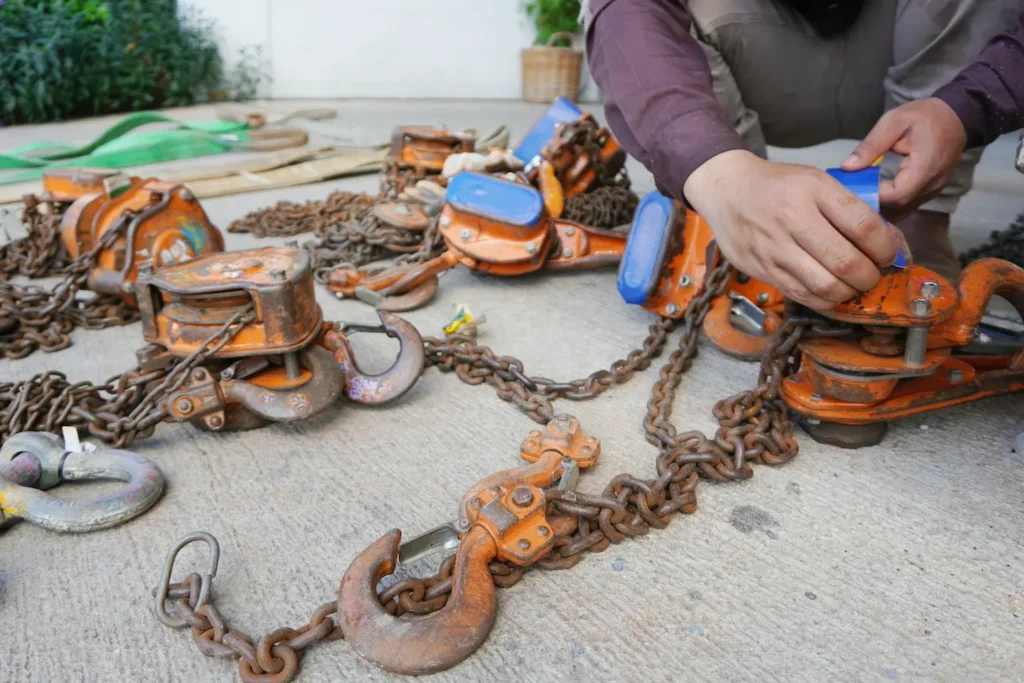
Person squatting on concrete, handling rusty orange and blue chain hoists and hooks. The scene conveys an industrial, hands-on work environment for the Crane Tech Rigging Gear Sling Inspector Training

Rigging Gear & Sling Inspector

Frequently Asked Questions

What’s the difference between Rigger Levels 1, 2, and 3?

Rigger Level 1 establishes the foundation with routine lifts and standard rigging practices. Level 2 advances into complex, non-routine lifts and supervision of Level 1 riggers. Level 3, also known as Master Rigger, represents the top of this progression, training participants to plan and direct entire rigging operations, including multi-crane lifts, critical load paths, and drift lifts, with a focus on leadership, planning, and hazard control.

Can I take Master Rigger without Level 2?

Participants must complete Rigger Level 2 or demonstrate equivalent experience. If you have extensive rigging background, a Training Advisor can confirm whether you’re ready for Level 3.

Does this qualify me as a Lift Director?

This program provides the knowledge and skills to perform as a Rigging Lift Director. In some cases, local regulatory authorities may require additional credentials before formally designating Lift Director responsibilities.

What standards does this course align with?

The training complies with OSHA 29 CFR, ASME B30.9, B30.10, B30.16, B30.20, B30.21, and U.S. Army Corps requirements.

How long is the qualification valid?

Crane Tech provides training and written/practical evaluations that support an employer’s qualification decision. These evaluation results are valid for two (2) years. Employers may require re-evaluation sooner based on job scope, workplace changes, or observed unsafe behavior.

Do you have more questions?